A deep clean is not a longer version of your weekly tidy. It is a different job: a full reset of the surfaces, appliances, and corners that regular cleaning never touches. Done right, it takes 6–10 hours for an average three-bedroom home and resets the baseline for months of easier upkeep.
This guide gives you the same room-by-room sequence a professional crew uses, the order it matters in, and the moments where hiring a deep cleaning service pays for itself.
What "deep cleaning" actually means
Standard cleaning maintains a baseline — wiping high-touch surfaces, vacuuming traffic lanes, restoring order. A standard clean is built for repetition.
Deep cleaning resets the baseline. You move furniture, open appliances, clean the surfaces behind and underneath the surfaces you usually wipe. Specifically:
- Hood vents, oven interiors, and refrigerator coils
- Grout lines, shower tracks, and behind toilets
- Baseboards, door frames, switch plates, light fixtures
- Inside cabinets and drawers
- Window tracks, sills, and blinds
- Behind and beneath every piece of furniture
If you have not done it in 4+ months, you are deep cleaning whether you call it that or not.
The pro sequence: top-down, dry-before-wet
Two rules govern professional deep cleans. Break them and you re-clean the same surface twice.
- Top to bottom. Ceilings, then high shelves, then mid-height, then floors. Dust falls; let it fall onto surfaces you have not done yet.
- Dry before wet. Dust and vacuum every surface before introducing any liquid. Wet dust becomes mud that you smear into corners.
Work one room at a time, finish it completely, then move on. Jumping between rooms is how supplies, time, and momentum disappear.
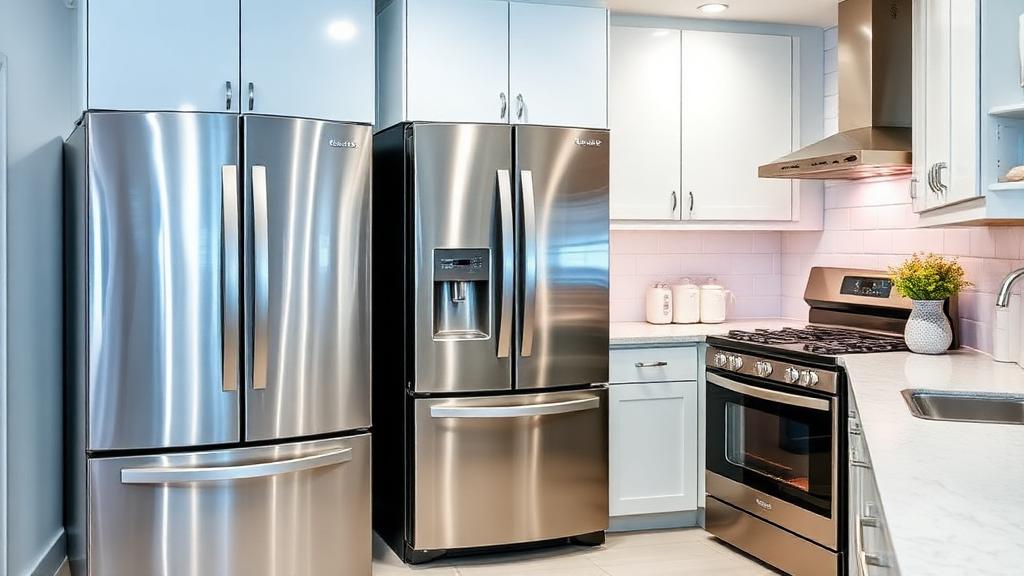
Kitchen
Allow 90–120 minutes. The kitchen is the room professional cleaners price highest because grease accumulates in places you cannot see until you lift, tilt, or open something.
Sequence:
- Empty the sink and clear all countertops onto the table.
- Pull the stovetop apart — grates, knobs, drip pans — and soak in hot soapy water.
- Spray oven interior with a cleaner (or paste of baking soda + water) and close the door. Let it sit while you do the rest.
- Wipe range hood, filter (degrease in the dishwasher if metal), and the top of upper cabinets.
- Empty the refrigerator one shelf at a time; wipe shelves, drawers, gaskets, and the top of the fridge.
- Wipe cabinet fronts top-to-bottom, paying attention to handles.
- Pull out small appliances; clean underneath and behind them.
- Degrease and sanitize countertops, then the sink and disposal (ice cubes + lemon peel + salt for the disposal).
- Reassemble the stovetop, wipe out the now-loosened oven.
- Sweep, then mop the floor — including under the toe-kick of cabinets.
For appliance-specific deep work — descaling the coffee maker, deodorising the dishwasher, polishing stainless — follow the kitchen appliance cleaning guide.
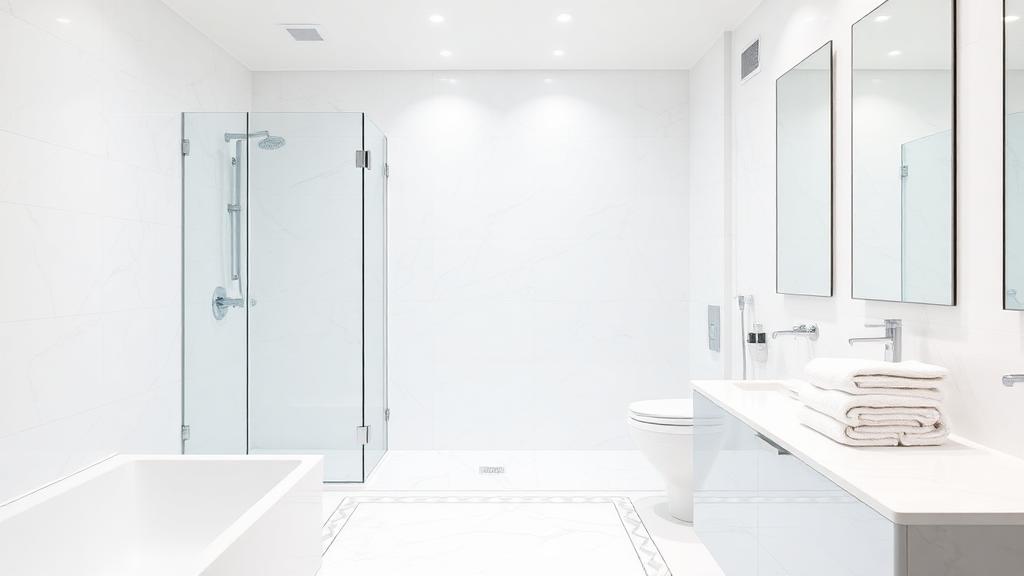
Bathroom
Allow 45–75 minutes per bathroom. Moisture is the enemy: every job in this room is about removing buildup, not maintaining shine.
- Strip towels and bath mats; toss in the wash.
- Spray the shower/tub with a soap-scum remover and let it dwell.
- Apply toilet bowl cleaner and let it sit.
- Dust the exhaust fan cover and light fixtures.
- Wipe down walls behind the toilet and beside the tub.
- Scrub grout lines with a stiff brush; whiten with a baking soda paste if needed.
- Clean the shower glass with a vinegar solution; squeegee dry.
- Polish faucets and fixtures — descale with vinegar for hard-water spots.
- Wipe the vanity, mirror, and inside the medicine cabinet.
- Clean the toilet (inside, outside, behind, base) last; mop the floor.
Bathroom shortcuts are usually false economy. The 15 bathroom cleaning hacks post covers the small techniques that save the most time without skipping steps.
Bedrooms
Allow 30–45 minutes per bedroom. A deep clean here is mostly about what is under, behind, and inside.
- Strip the bed completely. Wash sheets, pillowcases, and any washable pillows. Rotate or flip the mattress.
- Vacuum the mattress. Sprinkle baking soda, leave 15 minutes, vacuum off.
- Move the bed and dressers. Vacuum and mop the floor underneath. Wipe baseboards.
- Dust top-down: ceiling fan, high shelves, picture frames, headboard, nightstand, lamps.
- Clean closet: dust top shelf, vacuum closet floor, wipe down rod and hangers.
- Wash window glass and dust blinds. Wipe sill and track.
A pre-deep-clean declutter cuts the actual cleaning time by 30–50%. The decluttering guide explains how to do it without losing a weekend.
Living areas
Allow 60–90 minutes for living/dining areas combined.
- Vacuum upholstery, including under cushions. Use the crevice tool inside the frame.
- Spot-clean fabric with appropriate cleaner; rotate cushions.
- Dust all hard surfaces top-down — bookshelves, side tables, electronics.
- Wipe TV screens with microfiber only (no liquid sprays on the screen).
- Move rugs; vacuum the floor beneath; vacuum both sides of the rug.
- Wipe baseboards, door frames, and switch plates.
- Clean window glass; dust window treatments.
- Vacuum and mop or hand-clean floors based on flooring type.
The spots almost everyone forgets
Pros bill extra for these because most homeowners genuinely cannot see them anymore:
- Tops of door frames and upper cabinets
- Light switches, outlet covers, doorknobs
- Behind and under the toilet tank
- Refrigerator coils (vacuum the back/underside)
- Top of the ceiling fan blades
- Washing machine gasket and detergent drawer
- Inside the trash can (after emptying)
- Vents, registers, and return-air grilles
A 30-minute pass on this list alone makes a measurable difference in indoor air quality and dust accumulation rates.
How often a real deep clean is needed
For a typical home with no pets and no allergies, every 4–6 months is the right cadence. Move it earlier if any of these are true:
- Pets shed or track outdoor dirt — use the pet cleaning guide
- Someone in the household has allergies or asthma
- You live in a humid or coastal climate
- The house gets heavy foot traffic
- It has been more than 6 months and you are reading this
Maintain the reset with a recurring standard clean every 1–2 weeks. The combination of deep + recurring is what keeps a home consistently clean for less effort than a sporadic all-day blitz.
When to hire a pro instead
A do-it-yourself deep clean is reasonable if you have a full day, the right supplies, and physical capacity. Hire out when:
- You are moving in or out — see the move-in/move-out guide and our move-in/out service.
- The house is post-construction or post-renovation.
- It has been a year or more since the last deep clean.
- You manage short-term rentals — Airbnb cleaning handles turnovers separately.
- You would rather spend the day not cleaning.
A professional team of two finishes a typical three-bedroom deep clean in 4–5 hours and brings commercial-grade vacuums, extraction equipment, and consumables you do not stock. Pricing is covered in detail in the house cleaning cost guide.
Start with the room that bothers you most
You do not have to do the whole house in one weekend. Most homeowners get better results from a "one room per Saturday for four weeks" plan than from one exhausted attempt. Pick the room that bothers you most and start there.
When you are ready to hand it off, book a deep clean and a vetted Sweeppa cleaner will handle the reset. Browse vetted professionals or check the FAQ if you have questions before booking.