The EPA consistently finds that indoor air quality is 2–5x more polluted than outdoor air, and conventional cleaning products are one of the largest controllable contributors. Switching products is one of the few household decisions that improves both health and environmental impact at the same time.
This guide is the practical case: what the chemistry actually does to your body, the specific compounds worth refusing, the swaps that match commercial performance, and the myths (most green claims are marketing) that are worth ignoring.
What "green cleaning" means in practice
Genuinely safer cleaning products and methods:
- Non-toxic to humans and pets under normal use
- Biodegradable formulas
- Free of synthetic fragrance carriers, endocrine disruptors, and persistent chemicals
- Plant-derived or food-grade ingredients
- Carry independent third-party certification (not just a "natural" claim on the front of the bottle)
The certifications worth trusting (covered in detail in the eco-friendly products guide): EPA Safer Choice, Green Seal, EWG Verified, USDA Certified Biobased.
Front-label terms with no regulatory meaning: "natural," "non-toxic," "plant-based," "biodegradable." Check the actual ingredient list.
The health case
Respiratory effects
Conventional cleaning products are documented as significant contributors to:
- New-onset asthma in adults (cleaning workers have ~40% higher rates)
- Acute asthma exacerbation in existing patients
- Chronic bronchitis with long-term exposure
- Reduced lung function in adults who clean weekly with conventional sprays — a 2018 University of Bergen study found effects equivalent to smoking 20 cigarettes a day over 20 years
Switching to certified green products and avoiding aerosol sprays measurably reduces these risks.
Skin and allergy
The most common cleaning-related skin issues:
- Contact dermatitis from solvents and surfactants
- Long-term sensitisation that develops with repeated exposure
- Eczema flare-ups, especially in households with prior conditions
Children and people with sensitive skin react more. Switching products is often the cheapest medical intervention available.
Endocrine and reproductive effects
The compounds with the strongest evidence:
- Phthalates (in fragrance) — endocrine disruption, reproductive effects
- Triclosan (in antibacterial products) — hormone disruption, antimicrobial resistance
- Parabens (as preservatives) — endocrine disruption
- BPA (in some plastic packaging) — endocrine disruption
These ingredients are individually small risks. Daily exposure across multiple products is what concerns researchers.
The environmental case
Water systems
Wastewater treatment is designed for biological waste, not industrial chemistry. Conventional cleaning ingredients that pass through:
- QUATs (quaternary ammonium compounds) — persist in water systems
- Phosphates — algal blooms in waterways
- Triclosan — bioaccumulates in fish
Green-certified products biodegrade in treatment plants.
Indoor air quality (your air)
VOCs (volatile organic compounds) released by conventional cleaners contribute directly to indoor pollution. The EPA studies linked above found indoor VOC levels at 2–5x outdoor concentrations during and after cleaning sessions.
Green products minimise VOC release. Ventilation during cleaning matters regardless of which products you use.
Packaging
The packaging math matters less than the product math, but green brands typically lead on:
- Recycled or refillable bottles
- Concentrated formulas (1 oz makes 32 oz)
- Tablet or powder formats (Blueland, Branch Basics)
- Bulk-refill systems
The chemicals worth refusing
The 12 compounds with the strongest evidence and the safest available alternatives:
- Ammonia — respiratory irritant; never mix with bleach (lethal)
- Chlorine bleach — fume toxicity; have alternatives (hydrogen peroxide)
- Phthalates — listed as "fragrance" or "parfum"
- Triclosan — in antibacterial soaps and cleaners; banned in OTC soaps by FDA in 2016, still in cleaners
- 2-Butoxyethanol — common solvent in glass and degreasing cleaners
- Sodium hydroxide (lye) — strong drain and oven cleaners; severe burns
- Formaldehyde — released by some preservatives; carcinogen
- Perchloroethylene (PERC) — neurotoxin; found in some carpet and upholstery cleaners
- QUATs — disinfectants; respiratory effects
- Sodium lauryl sulfate (SLS) — surfactant; skin irritation
- Synthetic "fragrance" — single label term that legally hides hundreds of chemicals
- Phosphates — environmental persistence
Avoiding all 12 sounds extreme. In practice, switching to any green-certified brand (Seventh Generation, ECOS, Method, Better Life) eliminates most of them by default.
Green brands worth buying
Certified and verifiable:
Reliable across categories: Seventh Generation, Method, Mrs. Meyer's, Ecover, Better Life
Budget-friendly: ECOS, Biokleen, Green Works (the originally controversial one — has improved its formulations)
Premium / concentrate systems: Branch Basics, Blueland, Grove Collaborative
Four DIY recipes that match commercial performance
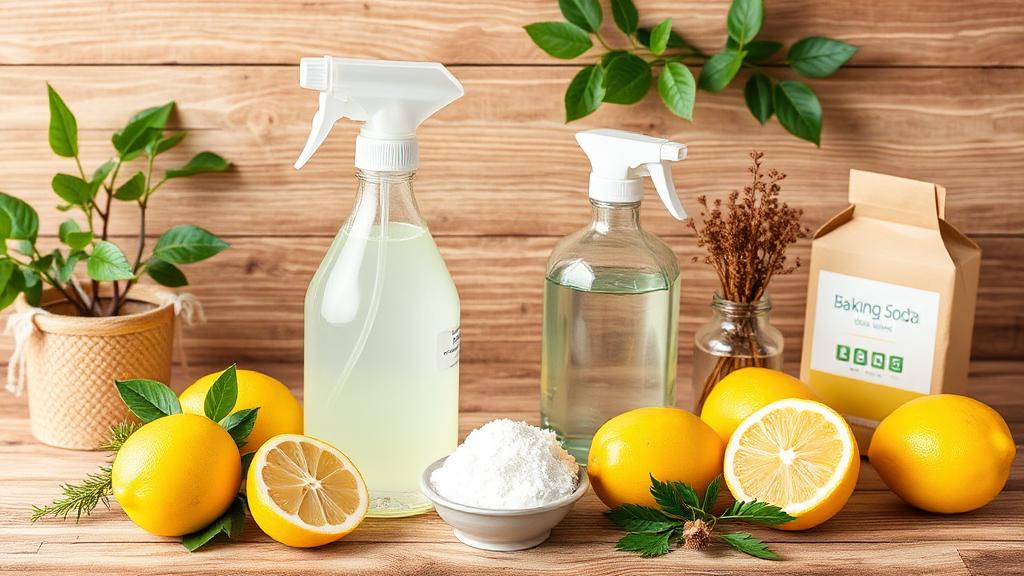
All-purpose surface cleaner
- 1 cup distilled water
- 1 cup white vinegar
- 15 drops essential oil (lemon, lavender, tea tree)
Skip on natural stone. Skip on aluminum.
Disinfecting spray (when needed)
- 2 cups water
- 3 tbsp castile soap
- 20 drops tea tree oil
- 10 drops lavender oil
Tea tree oil has documented antimicrobial properties; this is not magic-thinking. Not as fast as bleach but sufficient for normal household disinfection.
Streak-free glass cleaner
- 2 cups water
- ½ cup white vinegar
- ¼ cup rubbing alcohol (70%+)
Soft scrub for tubs and tile
- 1 cup baking soda
- ¼ cup castile soap
- 15 drops tea tree oil
Mix to paste. Apply, dwell, scrub, rinse.
Skip on natural stone.
Tools worth replacing
The cleaning tools matter as much as the chemistry:
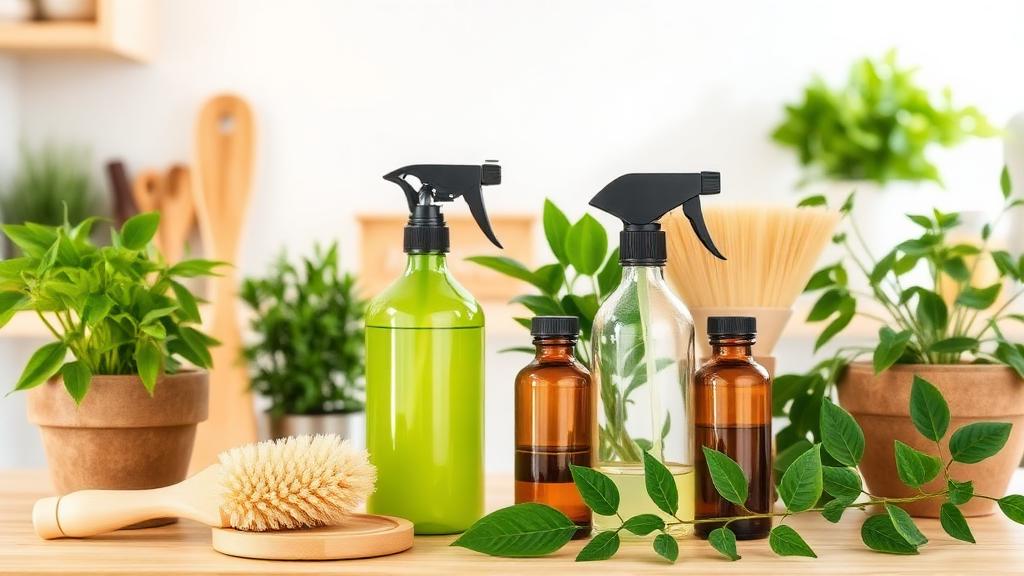
- Microfibre cloths replace paper towels (one cloth replaces hundreds of paper towels over its lifetime)
- Bamboo brushes
- Swedish dishcloths (cellulose; one replaces ~17 paper towel rolls; compost when worn)
- Refillable spray bottles
- Cellulose sponges (compostable)
- Wool dryer balls replace dryer sheets
Equipment:
- True-HEPA vacuum — captures fine particulate without re-suspending
- Steam mop — water-only floor cleaning
- Microfibre mop heads — washable; replace once a year
The transition plan
You do not need to throw out everything tomorrow. The cheapest, safest, and most sustainable plan:
- Replace as products run out. The item already in your house is the lowest-waste version.
- Start with the products you use most. All-purpose, glass cleaner, dish soap.
- Read the back label, not the front. Front-label claims are marketing.
- Accept that some replacements work slightly differently. Vinegar takes a bit longer than commercial spray. The result is the same.
Three myths to ignore
"Green cleaners don't actually clean as well"
For 95% of household tasks — counters, glass, surfaces, floors — modern green products match conventional performance. The 5% where conventional is genuinely faster (heavy oven grease, mildew in sealed grout) is rare household work.
"Green cleaning is more expensive"
DIY recipes are dramatically cheaper. Commercial green brands have become price-competitive over the last decade. Concentrate systems (Branch Basics, Blueland) are cheaper per use after the first kit.
"You need bleach to disinfect"
Hydrogen peroxide (3%), tea tree oil, and steam all disinfect effectively for normal household contexts. Bleach is genuinely necessary only for biohazard cleanup, mould remediation, and specific medical contexts.
When pros are involved
Most cleaning services will accommodate an eco-friendly preference if you note it at booking. Sweeppa cleaners bring their own supplies; specifying eco-friendly at booking ensures the products used in your home match your preference.
Book a cleaning and note the green-product preference at checkout. For the practical product guide (certifications, brands, DIY recipes), see the eco-friendly products guide; for pet-safe specifics (some essential oils are toxic to cats and dogs), see the pet cleaning post.